
Posted on Leave a comment

Cooking for One

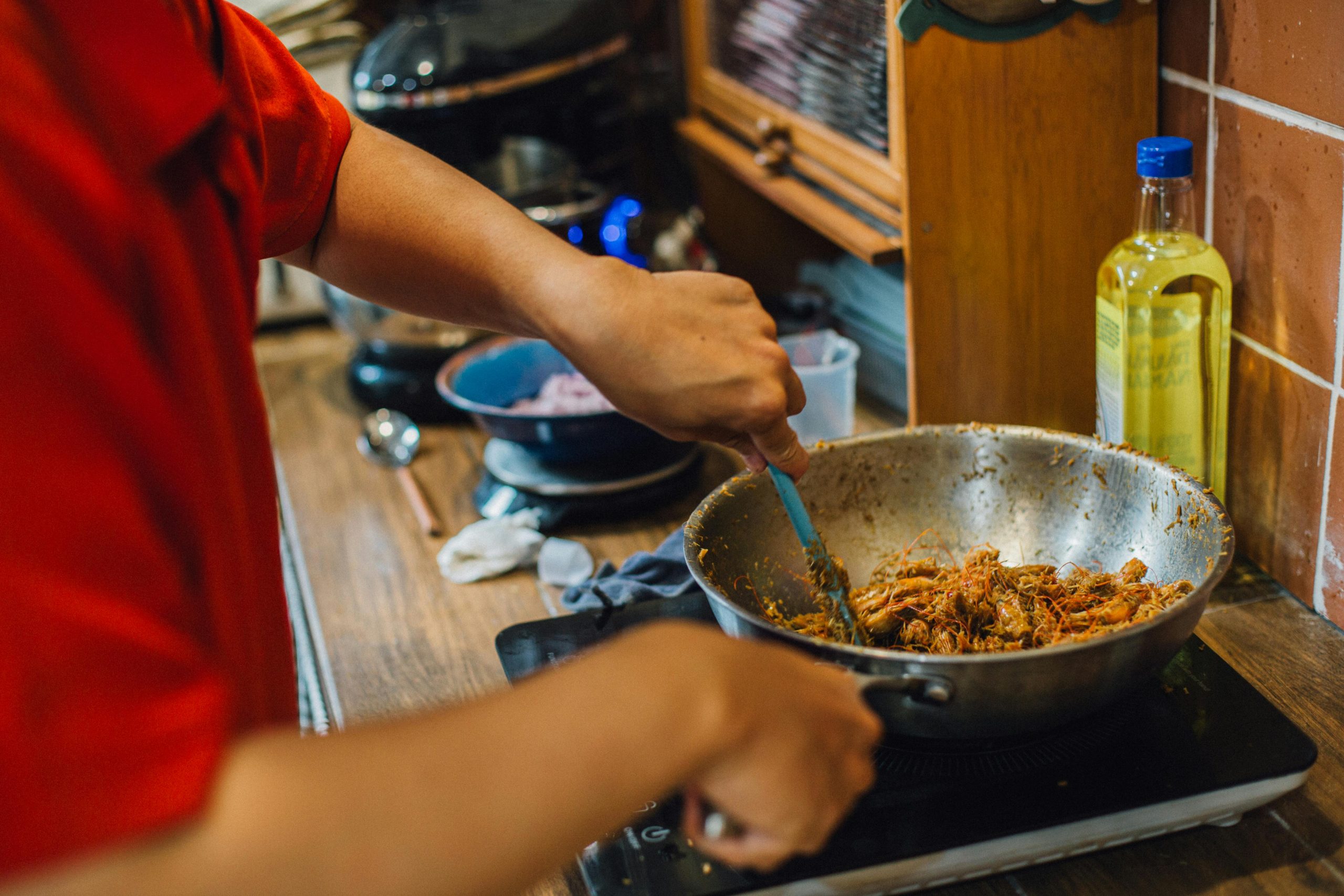
It is often frustrating to attempt to plan meals that are designed for one. Despite this fact, we are seeing more and more recipe books and Internet websites that are dedicated to the act of cooking for one. Divorce and the death of spouses or grown children leaving for college are all reasons that someone accustomed to cooking for more than one would suddenly need to learn how to adjust all the cooking practices utilized before into a streamlined plan of cooking that is more efficient for one person creating less waste.

The mission, should you choose to accept it, is to make cooking for one a challenge rather than a trial. Use this opportunity to try new and exciting cuisines. Perhaps one of the greatest things about cooking for one is the fact that it isn’t quite as expensive as cooking for two. This means that you have a little more money in the grocery budget with which to plan and prepare your meals.

One thing you may want to keep in mind however is that when cooking for one, if you prepare foods that are freezable. It may save more time (and in the end money) if you cook the full 2-4 servings that most recipes call for and freeze the leftovers in single serving portions for a later point in time. This leaves you with a freezer full of foods for those nights when the thought of cooking just seems beyond your capabilities. This also leaves you with doing the work once and enjoying the fruits of your efforts many times over. This is a great position to be in if you ask me.

We are finding more and more recipes and cookbooks that are designed around the concept of cooking for one. No matter what situation placed you in the position of cooking for one, there is no reason that you shouldn’t enjoy great food that is exciting and pleasant simply because you are dining alone. There is no harm in enjoying a fabulous meal with a glass of wine and great music whether you are cooking for one or one hundred.

Remember you are what you eat and if you relegate yourself to boring meals that lack excitement and spice that is what you will become. However if you decide to reach out and try new and exciting dishes with every meal you prepare when cooking for one, it will show in the way you embrace life in other areas as well. While we should not live to eat, we should also not limit ourselves to eating to live. Enjoy the foods you prepare whether the portions are large or small in size.

If you do not want to invest heavily in cookbooks that relate to cooking for one, it is quite possible that your local public library will have a few from which you can find some excellent recipes tips and resources. While you are there be sure to check out their selection of exotic food cookbooks in order to spice things up a bit. You never know what treasures you may discover on the shelves or your local library. You may even find local resources on classes that center on the idea of cooking for one. If the library proves to be a bust as far as resources go, the Internet is full of recipes, tips, and hints for those who are cooking for one.

Posted on Leave a comment

EARLY DETECTION OF DISEASE IN THE CHILD.

It is highly important that a mother should possess such information as will enable her to detect disease at its first appearance, and thus insure for her child timely medical assistance. This knowledge it will not be difficult for her to obtain. She has only to bear in mind what are the indications which constitute health, and she will at once see that all deviations from it must denote the presence of disorder, if not of actual disease. With these changes she must to a certain extent make herself acquainted.

Signs of health.

The signs of health are to be found, first, in the healthy performance of the various functions of the body; the regular demands made for its supply, neither in excess or deficiency; and a similar regularity in its excretions both in quantity and appearance.

If the figure of the healthy infant is observed, something may be learnt from this. There will be perceived such an universal roundness in all parts of the child’s body, that there is no such thing as an angle to be found in the whole figure; whether the limbs are bent or straight, every line forms a portion of a circle. The limbs will feel firm and solid, and unless they are bent, the joints cannot be discovered.

The tongue, even in health, is always white, but it will be free from sores, the skin cool, the eye bright, the complexion clear, the head cool, and the abdomen not projecting too far, the breathing regular, and without effort.

When awake, the infant will be cheerful and sprightly, and, loving to be played with, will often break out into its merry, happy, laugh; whilst, on the other hand, when asleep, it will appear calm, every feature composed, its countenance displaying an expression of happiness, and frequently, perhaps, lit up with a smile.

Just in proportion as the above appearances are present and entire, health may be said to exist; and just in proportion to their partial or total absence disease will have usurped its place.

We will, however, for the sake of clearness examine the signs of disease as they are manifested separately by the countenance, the gestures, in sleep, in the stools, and by the breathing and cough.

Of the countenance.

In health the countenance of a thild is expressive of serenity in mind and body; but if the child be unwell, this expression will be changed, and in a manner which, to a certain extent, will indicate what part of the system is at fault.

The brows will be contracted, if there is pain, and its seat is in the head. This is frequently the very first outward sign of any thing being wrong, and will occur at the very onset of disease; if therefore remarked at an early period, and proper remedies used, its notice may prevent one of the most fearful of infantile complaints “Water in the Head.”

If this sign is passed by unheeded, and the above disease be threatened, soon the eyes will become fixed and staring, the head hot, and moved uneasily from side to side upon the pillow, or lie heavily upon the nurse’s arm, the child will start in its sleep, grinding its teeth, and awake alarmed and screaming, its face will be flushed, particularly the cheeks (as if rouged), its hands hot, but feet cold, its bowels obstinately costive, or its motions scanty, dark-coloured, and foul.

If the lips are drawn apart, so as to show the teeth or gums, the seat of the pain is in the belly. This sign, however, will only be present during the actual existence of suffering; if, therefore, there be any doubt whether it exist, press upon the stomach, and watch the eifect on the expression of the countenance.

If the pain arise simply from irritation of the bowels excited from indigestion, it will be temporary, and the sign will go and come just as the spasm may occur, and slight remedial measures will give relief.

If, however, the disease be more serious, and inflammation ensue, this sign will be more constantly present, and soon the countenance will become pale, or sallow and sunken, the child will dread motion, and lie upon its back with the knees bent up to the belly, the tongue will be loaded, and in breathing, while the chest will be seen to heave with more than usual effort, the muscles of the belly will remain perfectly quiescent.

If the nostrils are drawn upwards and in quick motion, pain exists in the chest. This sign, however, will generally be the accompaniment of inflammation of the chest, in which case the countenance will be discoloured, the eyes more or less staring, and the breathing will be difficult and hurried; and if the child’s mode of respiring be watched, the chest will be observed to be unmoved, while the belly quickly heaves with every inspiration.

Convulsions are generally preceded by some changes in the countenance. The upper lip will be drawn up, and is occasionally bluish or livid. Then there may be slight squinting, or a singular rotation of the eye upon its own axis; alternate flushing or paleness of the face; and sudden animation followed by languor.

These signs will sometimes manifest themselves many hours, nay days, before the attack occurs; may be looked upon as premonitory; and if timely noticed, and suitable medical aid resorted to, the occurrence of a fit may be altogether prevented.

The state of the eyes should always be attended to. In health they are clear and bright, but in disease they become dull, and give a heavy appearance to the countenance; though after long continued irritation they will assume a degree of quickness which is very remarkable, and a sort of pearly brightness which is better known from observation than it can be from description.

The direction of the eyes, too, should be regarded, for from this we may learn something. When the infant is first brought to the light, both eyes are scarcely ever directed to the same object: this occurs without any tendency to disease, and merely proves, that regarding one object with both eyes is only an acquired habit. But when the child has come to that age when the eyes are by habit directed to the same object, and afterwards it loses that power, this circumstance alone may be looked upon as a frequent prelude to disease affecting the head.

Of the gestures.

The gestures of a healthy child are all easy and natural; but in sickness those deviations occur, which alone will often denote the nature of the disease.

Suppose an infant to have acquired the power to support itself, to hold its head erect; let sickness come, its head will droop immediately, and this power will be lost, only to be regained with the return of health; and during the interval every posture and movement will be that of languor.

The little one that has just taught itself to run alone from chair to chair, having two or three teeth pressing upon and irritating the gums, will for a time be completely taken off its feet, and perhaps lie languidly in its cot, or on its nurse’s arm.

The legs being drawn up to the belly, and accompanied by crying, are proofs of disorder and pain in the bowels. Press upon this part, and your pressure will increase the pain. Look to the secretions from the bowels themselves, and by their unhealthy character your suspicions, in reference to the seat of the disorder, are at once confirmed.

The hands of a child in health are rarely carried above its mouth; but let there be any thing wrong about the head and pain present, and the little one’s hands will be constantly raised to the head and face.

Sudden starting when awake, as also during sleep, though it occur from trifling causes, should never be disregarded. It is frequently connected with approaching disorder of the brain. It may forebode a convulsive fit, and such suspicion is confirmed, if you find the thumb of the child drawn in and firmly pressed upon the palm, with the fingers so compressed upon it, that the hand cannot be forced open without difficulty. The same condition will exist in the toes, but not to so great a degree; there may also be a puffy state of the back of the hands and feet, and both foot and wrist bent downwards.

There are other and milder signs threatening convulsions and connected with gesture, which should be regarded: the head being drawn rigidly backwards, an arm fixed firmly to the side, or near to it, as also one of the legs drawn stifly upwards. These signs, as also those enumerated above, are confirmed beyond all doubt, if there be present certain alterations in the usual habits of the child: if the sleep is disturbed, if there be frequent fits of crying, great peevishness of temper, the countenance alternately flushed and pale, sudden animation followed by as sudden a fit of languor, catchings of the breath followed by a long and deep inspiration, all so many premonitory symptoms of an approaching attack.

Of the sleep.

The sleep of the infant in health is quiet, composed, and refreshing. In very early infancy, when not at the breast, it is for the most part asleep in its cot; and although as the months advance it sleeps less, yet when the hour for repose arrives, the child is no sooner laid down to rest, than it drops off into a quiet, peaceful slumber.

Not so, if ill. Frequently it will be unwilling to be put into its cot at all, and the nurse will be obliged to take the infant in her arms; it will then sleep but for a short time, and in a restless and disturbed manner.

If it suffer pain, however slight, the countenance will indicate it; and, as when awake, so now, if there is any thing wrong about the head, the contraction of the eye-brow and grinding of the teeth will appear; if any thing wrong about the belly, the lips will be drawn apart, showing the teeth or gums, and in both instances there will be great restlessness and frequent startings.

Of the stools.

In the new-born infant the motions are dark coloured, very much like pitch both in consistence and appearance. The first milk, however, secreted in the mother’s breast, acts as an aperient upon the infant’s bowels, and thus in about four-and-twenty hours it is cleansed away.

From this time, and through the whole of infancy, the stools will be of a lightish yellow colour, the consistence of thin mustard, having little smell, smooth in appearance, and therefore free from lumps or white curded matter, and passed without pain or any considerable quantity of wind. And as long as the child is in health, it will have daily two or three, or even four, of these evacuations. But as it grows older, they will not be quite so frequent; they will become darker in colour, and more solid, though not so much so as in the adult.

Any deviation, then, from the above characters, is of course a sign of something wrong; and as a deranged condition of the bowels is frequently the first indication we have of coming disease, the nurse should daily be directed to watch the evacuations. Their appearance, colour, and the manner in which discharged, are the points principally to be looked to. If the stools have a very curdy appearance, or are too liquid, or green, or dark-coloured, or smell badly, they are unnatural. And in reference to the manner in which they are discharged, it should be borne in mind, that, in a healthy child, the motion is passed with but little wind, and as if squeezed out, but in disease, it will be thrown out with considerable force, which is a sign of great irritation. The number, too, of stools passed within the four-and- twenty hours it is important to note, so that if the child does not have its accustomed relief, (and it must not be forgotten that children, although in perfect health, differ as to the precise number,)

Of the breathing and cough

The breathing of a child in health is formed of equal inspirations and expirations, and it breathes quietly, regularly, inaudibly, and without effort. But let inflammation of the air-tubes or lungs take place, and the inspiration will become in a few hours so quickened and hurried, and perhaps audible, that the attention has only to be directed to the circumstance to be at once perceived.

Now all changes which occur in the breathing from its healthy standard, however slight the shades of difference may be, it is most important should be noticed early. For many of the complaints in the chest, although very formidable in their character, if only seen early by the medical man, may be arrested in their progress; but otherwise, may be beyond the control of art. A parent, therefore, should make herself familiar with the breathing of her child in health, and she will readily mark any change which may arise.

Whenever a child has the symptoms of a common cold, attended by hoarseness and a rough cough, always look upon it with suspicion, and never neglect seeking a medical opinion. Hoarseness does not usually attend a common cold in the child, and these symptoms may be premonitory of an attack of “croup;” a disease excessively rapid in its progress, and which, from the importance of the parts affected, carrying on, as they do, a function indispensably necessary to life, requires the most prompt and decided treatment.

The following observations of Dr. Cheyne are so strikingly illustrative, and so pertinent to my present purpose, that I cannot refrain inserting them: “In the approach of an attack of croup, which almost always takes place in the evening, probably of a day during which the child has been exposed to the weather, and often after catarrhal symptoms have existed for several days, he may be observed to be excited, in variable spirits, more ready than usual to laugh than to cry, a little flushed, occasionally coughing, the sound of the cough being rough, like that which attends the catarrhal stage of the measles. More generally, however, the patient has been for some time in bed and asleep, before the nature of the disease with which he is threatened is apparent; then, perhaps, without waking, he gives a very unusual cough, well known to any one who has witnessed an attack of the croup; it rings as if the child had coughed through a brazen trumpet; it is truly a tussis clangosa; it penetrates the walls and floor of the apartment, and startles the experienced mother, ‘Oh! I am afraid our child is taking the croup!’ She runs to the nursery, finds her child sleeping softly, and hopes she may be mistaken. But remaining to tend him, before long the ringing cough, a single cough, is repeated again and again; the patient is roused, and then a new symptom is remarked; the sound of his voice is changed; puling, and as if the throat were swelled, it corresponds with the cough,” etc.

How important that a mother should be acquainted with the above signs of one of the most terrific complaints to which childhood is subject; for, if she only send for medical assistance during its first stage, the treatment will be almost invariably successful; whereas, if this “golden opportunity” is lost, this disease will seldom yield to the influence of measures, however wisely chosen or perseveringly employed.

Posted on Leave a comment

Common Services Offered by Most Beauty Salons

Are you interested in getting a little appearance update or are you just interested in pampering yourself a little bit? If you are, you may want to think about heading down to your local beauty salon. Beauty salons are the perfect place to a new hair do or even another beauty update.

When it comes to visiting a beauty salon, many individuals wonder what type of procedures they should undergo. If you are one of those individuals, you may want to keep on reading on. Although different beauty salons provide different services to their customers, you will find that many offer the same or similar ones. A few of the most popular beauty salon services are outlined below and they are ones that you will definitely want to checkout.

When many people think of beauty salons, one of the first things that pops into their mind is hair cuts. Hair care is a service that is offered by almost all beauty salons. Hair care services often include a trimming, shampooing, dying, highlighting, and so forth. Many beauty salons also specialize in doing up-dos, or other elegant hair styles for popular events like proms and weddings. Whether you are looking to just get a haircut or you need an up-do, your local beauty salon should be able to offer you assistance.

Skincare is another service that is offered by many beauty salons. In terms of skin care, you will find that the most common service offered is tanning. A lager number of beauty salons have tanning beds for customers to use. In addition to traditional tanning beds, a large number of beauty salons are now starting to offer spray on tans, which are one hundred percent safer than using tanning beds. If you would like to get a tan for a special event, like a wedding or a vacation, or just because, you may want to see what your beauty salon can do for you.

Another one of the many services offered at most beauty salons that you may be interested in learning more about is nail care. Many women choose to leave their nails plain, but many more like to paint them, get manicures and so forth. If you would like to have your nails professionally done, whether it be for work, for a wedding, or just because, you should think about making an appointment at one of your local beauty salons.

Nail care, hair care, and tanning are a few of the many services that you may be able to undergo at one of your local beauty salons. In addition to a traditional beauty salon, you may also find a beauty salon spa in or around the area in which you live. If you have a local beauty salon spa, you may want to think about stopping by. Beauty salons spas are like traditional salons, but they also offer spa treatments and have a spa-like setting. Common treatments offered at a beauty salon spa include massages, acupuncture, body wraps, and much more.

As previously stated, the above mentioned services are just a few of the many that are commonly offered at beauty salons and beauty salon spas and they are some of the most popular treatments available. If you would like more information on what is available to you locally, you may want to think about placing a call to your local beauty salon or beauty salon spa.

Posted on Leave a comment

Beauty Pageants: Should You Let Your Teen Enter Them?

Are you the parent of a teenager, namely a female teen? If you are, has your teen ever mentioned entering into a beauty pageant before? If she recently has, have you given her a decision yet? For many parents, their first though is “no way,” but you should know that beauty pageants are all not as bad as they seem.

When it comes to determining whether or not you should let your teen enter a beauty pageant or even a number of them, you should know that there are a number of pros and cons to doing so. One of those pros or plus sides is the fact that it is something that your teenager wants to do. If your teenager was the one who brought up a beauty pageant then there is a good chance that it is something that interests them.

Another one of the many pros or plus sides to allowing your teen enter a beauty pageant or even a number of them is because of the rewards. What is nice about beauty pageants is that you don’t just get a trophy or a ribbon, but you also get a cash prize reward. Instead of cash, some beauty pageants even give out scholarships. If your child is interested in making their own money or if they are interested in going to college, a beauty pageant may actually be able to help them achieve their goals.

While there are a number of pros to letting your teen enter into beauty pageants, there are also a number of cons or downsides to doing so as well. One of those downsides is the work that goes into attending beauty pageants. Now, if your teen was only interested in competing in a local pageant, this may not be as big of an issue for you. However, there are beauty pageant families out there who actually spend time traveling across the country participating in beauty pageants. While you and your teen can do this if you want, it often places a lot of stress, both emotional and financial, on all family members.

Another one of the cons or downsides to allowing your teen to participate in a beauty pageant is the results. Unfortunately, it seems as there is a stereotype associated with beauty pageants. Many individuals only believe that beauty pageants are for those who are breathtakingly beautiful or skinny. Perhaps, this is due in part to the fashion industry and many beauty pageant judges. Although your teen can participate in a beauty pageant if she wants to, no matter what her appearance is, it is something that you may want to take into consideration. For teens, there is nothing worse or more damaging to one’s self-esteem if they are told or made to feel as if they aren’t pretty or talented enough.

In keeping with the competition, your teen may find it quite difficult to jump right into beauty pageants. A good number of the teens who participate in beauty pageant have done so since they were a toddler or elementary school aged. While not always, these participants are often more likely to see success than someone who recently decided to enter a beauty pageant. Of course, that doesn’t mean that your teen can’t place high or even win a beauty pageant, but it does mean that they may have a lot of hard work ahead of them.

The above mentioned pros and cons are just a few of the many that exist. If your teen has recently asked you if they could take part in a beauty pageant, it is something that you and the rest of your family may want to seriously consider or at least closely examine.

Posted on Leave a comment

7 Diet Secrets of the Stars

Celebrities are usually stunning. They never cease to enchant us with their larger-than-life presence, whether on television or in films, or walking down the red carpet at movie premieres and awards shows. The truth is that they put forth a lot of effort to look the way they do, and as public figures, they can’t afford to be slack when it comes to maintaining their physical appearances. Their livelihood is mostly determined by their appearance. Celebrities must look after their bodies in addition to their clothes, hair, and makeup.

It’s no wonder, then, that these celebrities have their own fitness and beauty secrets. Extreme workouts to well-planned meals are all on their wellness agenda. Who wouldn’t want to know how they manage to stay so sexy? The following are seven celebrity women’s diet secrets.

  1. Jennifer Aniston
    She was known for having one of the sexiest bodies in Hollywood, as she appeared on countless magazine covers. The star of the phenomenal television show Friends not only mesmerised audiences with her adorable comic sense and famous hairstyle, but she was also known for having one of the sexiest bodies in Hollywood, as she appeared on countless magazine covers. Jennifer adheres to the 40:30:30 diet plan to maintain her slim figure. The following foods are included in the diet:

40% Low glycemic carbohydrates
-Foods such as beans, fruits and vegetables, legumes

30% lean proteins
-Tofu, fish, chicken, turkey, beef and low fat dairy products

30% essential fats
-nuts and seeds, fish and olive oils

It is essential that every meal should contain macronutrients to attain the balance of hormones and maximum weight loss.

  1. https://crazyextra.com/category/helth/Kate Hudson
    During her pregnancy, the stunning daughter of actress Goldie Hawn gained 60 pounds, which she needed to lose swiftly before starting work on her next project. She changed her diet from a low-protein to a high-protein one. She ate high-protein, small-portioned meals and supplemented her diet with a fitness routine that included both weight training and cardiovascular exercises. Kate lost all of her baby weight in only four months after receiving a lot of abuse for her post-pregnancy appearance, and has grown abdominal muscles that many in Hollywood desire.
  2. Oprah Winfrey
    Oprah Winfrey, as one of the most popular talk-show hosts in the world, knows how important it is to keep her physical look in order to appeal to her millions of viewers. She has recently toned up her figure and has never looked figure in age 50 by combining a regular fitness regime and nutrition plan. She is known for being one of those celebs who is continually battling weight gain. Oprah goes to the gym five days a week and spends 30 minutes on the threadmill and free weights. Her diet consists of beans, fish, nuts, fruits and vegetables, chicken, and low-fat dairy products. She eats white sugar and flour in moderation. Oprah also attributes her slim body to her refusal to eating anything after seven in the evening.
  3. Gwyneth Paltrow
    Many people may find it difficult to believe that the consistently slender Academy Award winner needs to diet. Gwyneth does, in fact, follow a similar healthy eating regimen to Oprah’s, eliminating sugar and white flour. She frequently eats vegetables, brown rice, and lean meat as part of a macrobiotic diet. She also cuts out dairy from her diet and practises yoga on a daily basis.
  4. Madonna
    The pop artist known as the Material Girl has always had a killer body and has evolved into a true fitness icon over time. She stays in shape by practising Ashtanga Yoga and adhering to a strict diet that avoids junk food. She started eating a macrobiotic diet, which consists of organic foods high in lean protein.
  5. Claudia Schiffer
    For dinner, the svelte German supermodel eats salad and steamed vegetables, and before the afternoon, she only eats fruits. She prefers to eat black grapes and sip tomato juice and herbal tea when on location.
  6. Christie Brinkley
    Long-time supermodel and vegetarian maintains her all-American beautiful looks. She has no junk food of any kind in her house to ensure that she does not eat it when she has a craving. When she wants to lose weight quickly, she eats sweet potatoes instead of candy bars and follows a liquid juice diet.

Celebrities are just like ordinary people. They need to maintain their figures just like anyone else, and there is more pressure on their part since they are constantly in the public eye. Ordinary folks can have celebrity-like bodies, too, and by following these diet and fitness plans, they can also look like red-carpet worthy.

Posted on Leave a comment

The Secret to a Happier Life

The essence of time management is being focused. The Pareto Principle, sometimes known as the “80:20 Rule,” states that 80% of non-time-managed or misdirected efforts only yield 20% of the required output. With appropriate time management, however, 80 percent of the required output can be achieved with only 20% of the effort. Although the 80:20 ratio is entirely coincidental, it is used to emphasise how much time can be saved or gained through excellent time management.

Some individuals consider time management to be a set of rules that include making appointments, creating goals, thorough planning, making to-do lists, and prioritising. These are the time management essentials that must be understood in order to develop a successful personal time management strategy. These core abilities can be fine-tuned to cover the finer elements of each skill, giving you that extra reserve to get the outcomes you want.

However, time management necessitates more than just the fundamentals. Decision-making skills, as well as inherent characteristics like emotional intelligence and critical thinking, are vital to your personal development.

Everything you do affects your own time management. Everything matters, no matter how big or small it is. Each new piece of information you gain, each new piece of advise you consider, and each new skill you develop should all be taken into account.

A balanced lifestyle should be the most significant outcome of personal time management. Many people ignore the most critical aspect of personal time management.

When it comes to time management, it’s all about getting things done rather than being busy.

Personal time management strives to improve the physical, intellectual, social, career, emotional, and spiritual aspects of a person’s life.

Maintaining a healthy physique, as well as lowering stress and fatigue, are all part of the physical component.

The intellectual element includes learning and other mental growth activities.

Forming personal or close relationships, as well as being a contributing member of society, are all aspects of the social element.

The career component includes both school and work.

Expression of acceptable feelings and desires is part of the emotional side.

A personal search for meaning is part of the spiritual dimension.

Even if precise planning and keeping a to-do list for each of the critical areas isn’t possible, understanding which portions of your life aren’t getting enough attention is a crucial part of time management. Because each zone contributes to the whole you, ignoring one means ignoring a big chunk of yourself.

Personal time management does not have to be a dreaded task. It’s a method for dealing with any problem, big or small, that is logical and rational.

Following a few basic duties is an excellent way to improve your time management and personal life.

One of them is to evaluate your short- and long-term objectives on a frequent basis.

One way to accomplish this is to have a list that is constantly accessible to you.

Always determine which task is necessary or not necessary in achieving your goals and which activities are helping you maintain a balanced life style.

Each and everyone of us has a peek time and a time when we slow down, these are our natural cycles. We should be able to tell when to do the difficult tasks when we are the sharpest.

Learning to say “No”. You actually see this advice often. Heed it even if it involves saying the word to family or friends.

Pat yourself at the back or just reward yourself in any manner for an effective time management result.

Try and get the cooperation from people around you who are actually benefiting from your efforts of time management.

Don’t procrastinate. Attend to necessary things immediately.

Have a positive attitude and set yourself up for success. But be realistic in your approach in achieving your goals.

Have a record or journal of all your activities. This will help you get things in their proper perspective.

These are the first steps toward becoming a well-rounded individual.

As they say, personal time management is the art and science of living a better life.

You’ve opened up a world of possibilities for your personal development the moment you incorporate time management skills into your daily routine. It also increases the number of doors you can knock on.